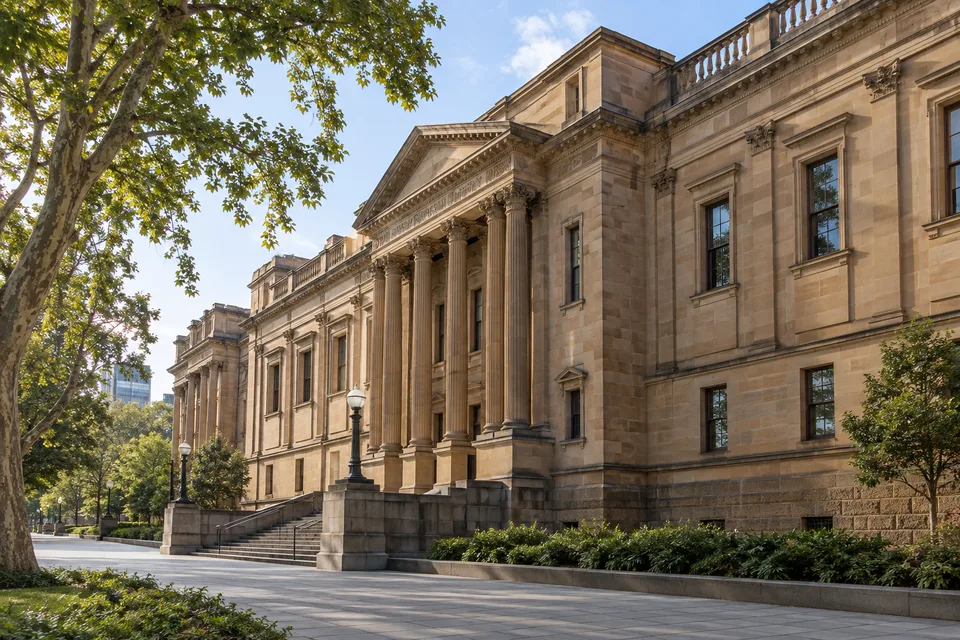
The Australian Museum sits at 1 William Street, opposite Hyde Park in central Sydney. It is a useful stop for travellers looking for a museum visit grounded in natural science, culture and the Australian region rather than a single narrow subject. The museum’s visitor information says general entry is free, making it possible to build a flexible visit around permanent displays, a temporary exhibition or a return trip later in the day.
Begin with the practical details
The museum is open daily from 10am to 5pm and closes on Christmas Day. General entry does not require a ticket for permanent exhibitions, while fees can apply to major exhibitions and bookings can be needed for special events. These details can change, so check the museum’s current visitor page before travelling, particularly around public holidays or if a specific programme is the reason for your visit.
The address is on the corner of College and William streets, close to Museum, Town Hall and St James stations, Gadigal metro station, Town Hall and Hyde Park bus stops, and Town Hall light rail. The museum states that it has no on-site parking; nearby CBD parking is the relevant option for visitors arriving by car. That makes public transport or a city walk a straightforward way to approach a visit.
See the museum through its collections
The Australian Museum describes its collection as more than 22 million specimens and objects. Its collections page groups this material across natural science and cultural collections, spanning subjects from fossils, animals and minerals to cultural heritage. That breadth is the reason to arrive with a question rather than a checklist: a visitor interested in Australia’s wildlife may plan differently from someone interested in geology, palaeontology or cultural collections.
The museum’s collection guidance also makes an important distinction for cultural material. It describes First Nations collections as living cultures of Aboriginal and Torres Strait Islander peoples, Pasifika and World Cultures, cared for through appropriate cultural protocols and collaboration with First Nations communities. A respectful visit means following any collection or exhibition guidance presented in the galleries and allowing the museum’s own context to lead the encounter.
Give the visit a clear focus
For a first visit, use the current museum map and What’s On material to choose one or two priorities. The visitor page identifies dinosaur displays and Australian-animal content among the experiences available, while the collection material provides a wider frame for what sits behind public exhibitions. Selecting a focus leaves time to read labels and move at a measured pace instead of treating the museum as a race through every floor.
Visitors drawn by a special exhibition should book or check its conditions separately. Visitors using general entry can keep the plan more open: arrive, orient yourself at the current visitor information, then follow a natural-science or cultural-collections thread. The practical benefit of the central location is that the museum can stand alone as a half-day destination or form part of a wider city itinerary around Hyde Park and the CBD.
Plan for a return, not total coverage
A large collection rewards repeat visits. The museum’s published collection scope reaches well beyond the objects visible in any one visit, and its exhibitions and programmes change over time. Let the current programme determine the detail of the day, but keep the bigger picture in mind: the Australian Museum provides a public entry point to research, collections and stories about the Australian region. A focused visit is more useful than an attempt to see everything.
Sources
Sources last validated: 14 September 2026.