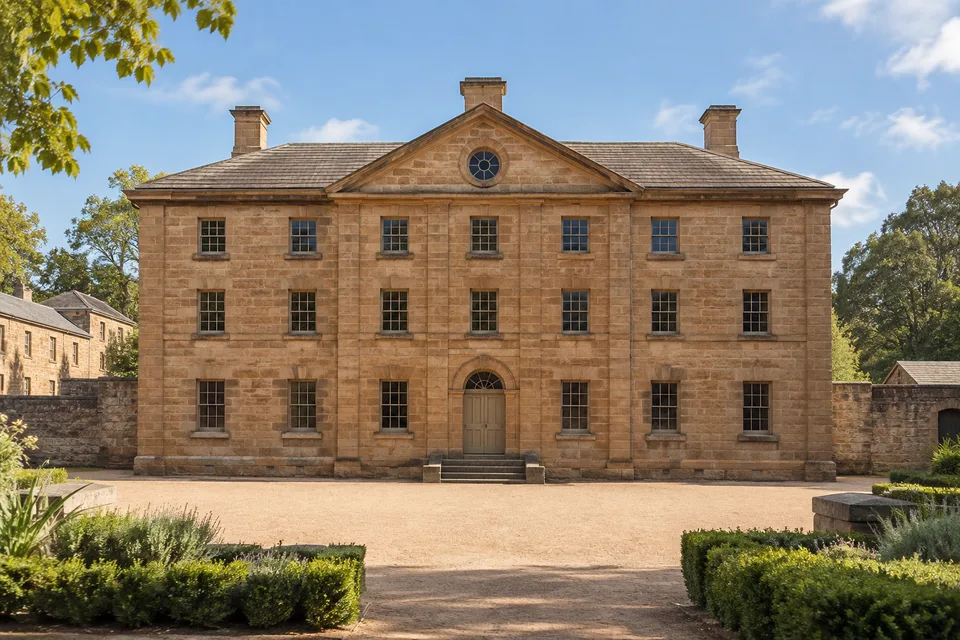
Hyde Park Barracks in Queens Square is a rare place to meet early colonial Sydney through a building rather than a monument. Museums of History NSW acknowledges the Gadigal people of the Eora Nation as the Traditional Custodians of the Country on which the barracks sits, and acknowledges the continuing impact that the barracks has had on Aboriginal Country. That framing belongs at the beginning of a visit: the site’s history is not sealed in the past, and its stories are not limited to one group of occupants.
A building with many lives
The museum describes Hyde Park Barracks as one of Australia’s best-preserved convict-era buildings. Its current interpretation follows the thousands of convicts, migrants and institutionalised women who lived, worked or survived here. This breadth is the point of the visit. Instead of looking for a single heroic narrative, visitors can trace how one institution changed purpose and affected many lives across more than two centuries.
The barracks is part of the UNESCO World Heritage listing for Australian Convict Sites. Museums of History NSW describes it as a place recognised for its links to forced migration, colony building and convict culture. The museum also records that the building became Sydney’s Female Immigration Depot in 1848, and temporarily housed an estimated 40,000 women during its 38-year history. These histories sit alongside each other rather than forming neat chapters, giving the visit its necessary complexity.
Let the interpretation set the pace
This is a self-guided museum experience, with audio installations, soundscapes and more than 4,000 original artefacts on display according to the current visitor information. Those elements make it possible to move at a deliberate pace: listen before moving on, take time with an object or a room, and allow the building itself to remain part of the interpretation. The experience is designed around personal stories of convicts, migrants and First Nations people, alongside accounts of hardship, resilience and resistance.
The most useful approach is to arrive ready to read carefully. The site’s interpretation addresses colonisation and its ongoing impact on First Nations peoples. Visitors do not need to manufacture an emotional response for the experience to matter; the documented stories, architecture and collection give the visit its substance. A slower circuit also makes space for the less obvious evidence held in the building’s walls, floors and ceilings, which the museum links to earlier occupants.
Practical details before you go
Hyde Park Barracks is on Gadigal Country at Queens Square, Macquarie Street, Sydney. The museum currently lists daily opening from 10am to 6pm, with last entry at 4.30pm, and closures on Good Friday and Christmas Day. It also identifies the site as wheelchair accessible. Opening arrangements and programmes can change, so check the official visitor page before travelling, especially when a particular access need, group visit or event is central to the day.
No price, booking condition or event availability is assumed here beyond the museum’s current visitor information. The website describes the standard experience as free. If timing matters, use its current details rather than relying on an old guide. The barracks is best treated as a substantial destination in its own right, not simply a historical stop inserted between other central-Sydney sights.
Leave with questions, not a simplified past
Hyde Park Barracks offers a grounded way to think about institutional life in colonial Sydney. Its World Heritage recognition, preserved convict-era fabric, Female Immigration Depot history and current First Nations acknowledgement all make the place more than a period setting. Give the self-guided experience enough time to work through those layers. The most lasting part of a visit may be the questions it leaves about whose lives were organised, constrained and remembered within the same walls.
Sources
Sources last validated: 14 September 2026.